Welcome to
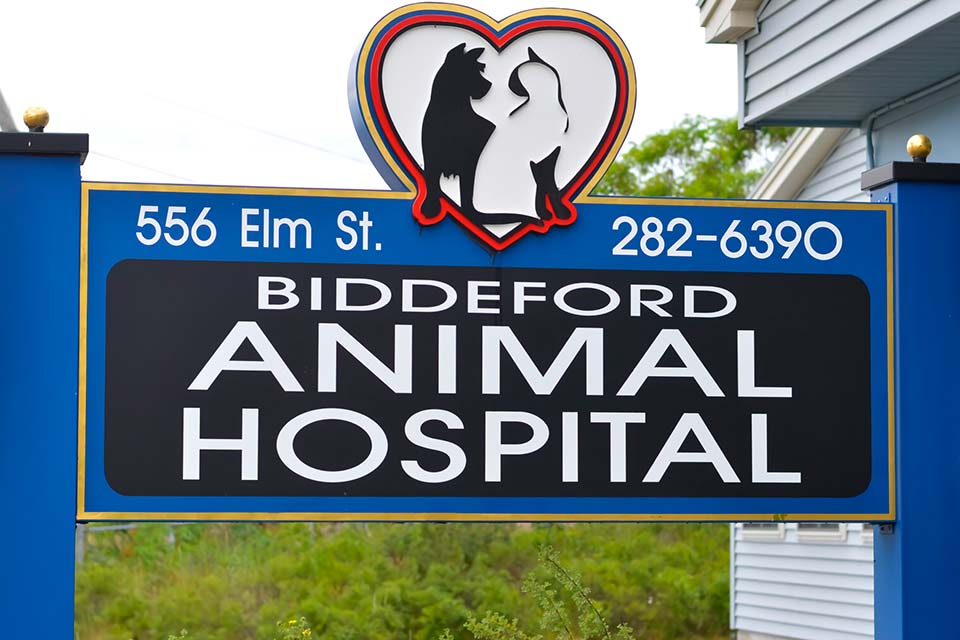
Veterinarian in Biddeford, ME
Treating Your Pets Like Our Pets
Cats ♥ Dogs ♥ Pocket Pets ♥ Reptiles ♥ Exotic Pets
Biddeford Animal Hospital has been serving Southern Maine’s families and their pets for over 30 years and is committed to providing the best quality veterinary care by a compassionate, respectful, and friendly health care team.
Request AppointmentFAQs
What types of pets do you treat?
At Biddeford Animal Hospital we treat dogs, cats, a host of small mammals and assorted reptiles!
What are your hours?
Mon, Tue, Thu : 8:00 am-5:30 pm
Wed: 9:00 am-6:30 pm
Fri: 8:00 am-12:00 pm
Sat-Sun: Closed
Wed: 9:00 am-6:30 pm
Fri: 8:00 am-12:00 pm
Sat-Sun: Closed
Do you see emergencies?
We have veterinarians and support staff on duty 4 and a half days a week, who are trained and equipped to help with your pet. Usually an emergency team consists of at least one veterinarian and several technicians and assistants working together to save a pet’s life. If you ever feel that your pet needs emergency treatment do not hesitate to call (207) 282-6390. If possible, it is best to call before coming in so that a team member can advise you on your particular emergency and prepare equipment as necessary. We do our best to see emergencies on a case by case basis, but there are times that your pet’s emergency would be best handled by an emergency facility that is open 24 hours a day.
Learn MoreWhat forms of payment do you accept?
In order to maintain our high standard of service, we require that payment is made at the time services are rendered. We provide estimates for all surgeries and hospitalizations. If you have not received an estimate, you are welcome to request one at any time for your expected charges. Biddeford Animal Hospital is happy to accept:
- Cash
- Check (with valid ID)
- Debit Card
- MasterCard
- Visa
- American Express
- Trupanion Express
- CareCredit
What services do you offer?
At Biddeford Animal Hospital we strive to provide high quality care for all of our patients. Some of the services we offer include:
- Wellness and Emergency Exams
- Small Mammal Exams
- Vaccinations
- Microchipping
- Dentistry
- Acupuncture
- Humane Euthanasia